

-
by _elleyce
- December 6, 2025
- 0 Comments
So I was thinking about how I dig through transaction logs on Sunday mornings. Whoa, that surprised me. I often start with a hunch about a weird transfer or token mint. My instinct said there was a dropped instruction, but I dug in and found somethin’ stranger: a misrouted token account on mainnet-beta. At first glance the data looks clean and simple, though actually there are layers that only peel back if you lean in.
Whoa, that surprised me again. I like quick reads, but this stuff needs patience. Solana blocks are fast and the explorers move fast too, which is both great and confusing. Initially I thought a failed transaction was just gas issues, but then realized you can have decode problems or program-level reverts that aren’t obvious from a simple status flag.
Really? This part bugs me. When a tx shows “failed” you get a red pin and the impulse is to blame fees. But the logs tell the real story. If you open the instruction decoder you can see which program errored and why. Sometimes the runtime log prints a human-friendly line; other times you need context (account owners, rent exempt status, token mint constraints).
Okay, so check this out—developers and power users treat explorers like debugging consoles. For me it’s part intuition and part methodical lookup. I run through signatures, then slot numbers, then program logs. Once I had to trace a lost NFT transfer and it turned into a phone-tag with a dev who had to confirm a program upgrade. That felt oddly satisfying when solved.
Hmm… here’s the thing. A lot of users only look at the surface: wallet address, balance, recent transfers. That’s fine for day-to-day checks. But if you’re troubleshooting you want to check instruction traces, pre/post balances, and the exact lamport movements tied to accounts. Also watch for inner instructions emitted by programs, because tokens sometimes move inside programs without a top-level transfer showing the whole picture.
Where explorers like solscan explorer actually help
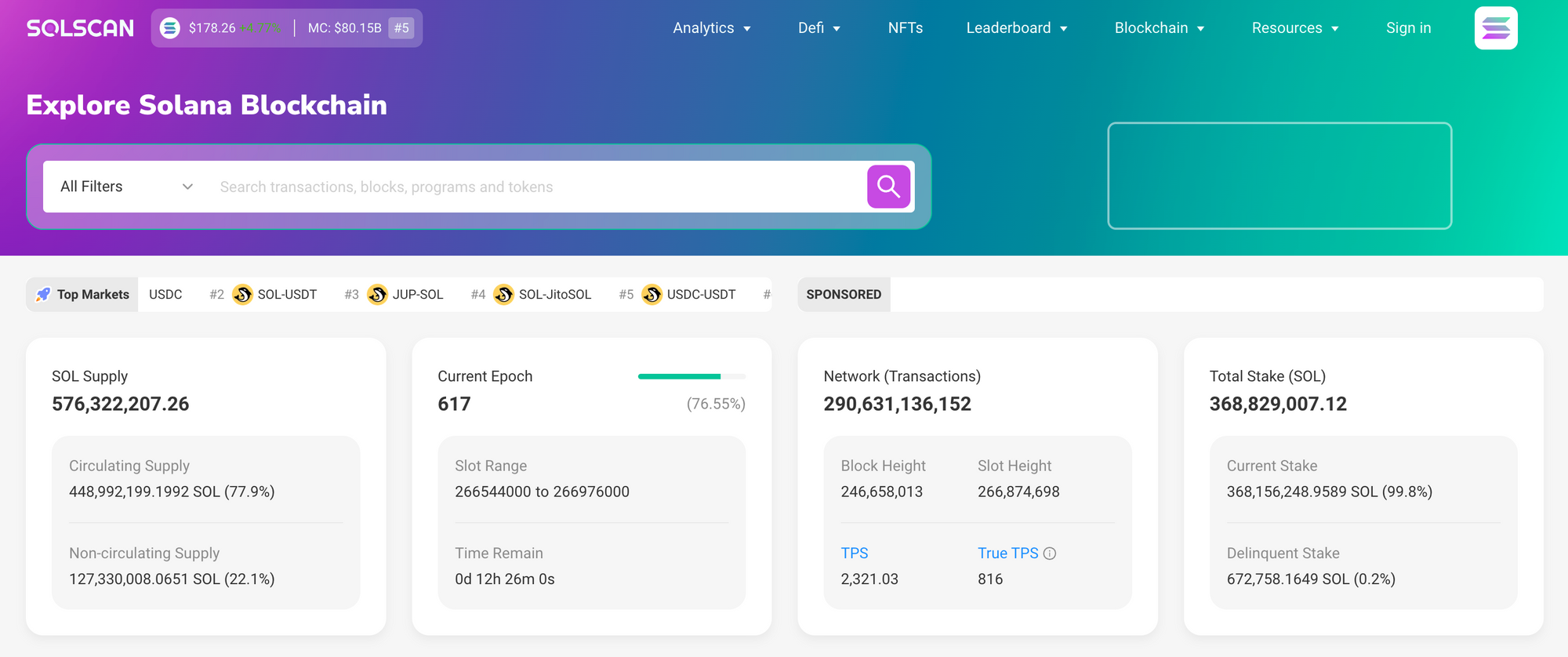
I use the solscan explorer as my quick go-to when I want a readable view. Seriously? Yes—it’s that useful. It surfaces decoded instructions, token account snapshots, market charts, and rich token metadata all in one place. For many situations the site saves me from firing up a local node or writing a quick script.
Whoa, this is practical. If you paste a signature you get a full timeline. If you paste an address you see token holdings and historical activity. There are charts that show daily volumes and holder distributions, which helps when I’m vetting a new token or NFT collection. I’m biased, but the consistent layout makes repetitive checks much easier.
My approach is simple and repeatable. Step one: copy the transaction signature. Step two: check status and slot finality. Step three: inspect logs and decoded instructions. Step four: examine pre/post token balances. Step five: look for inner instructions. Rinse and repeat until the mystery is resolved.
Initially I thought raw RPC calls were always necessary, but then realized explorers offload the heavy mental work. Actually, wait—let me rephrase that: explorers save time, but you still need to know which RPC methods to use when writing automation. So I toggle between web views and code depending on complexity.
Really? This dual-mode workflow saved me hours on a buggy marketplace integration. The marketplace’s submit flow was dropping a key account, and the explorer showed early that the program invoked an account it didn’t own. That led to a quick fix in the client where we set the correct owner on token accounts.
Here’s a practical checklist if you want to be efficient. First: confirm the cluster (mainnet-beta vs testnet). Second: check signature confirmation level (processed, confirmed, finalized). Third: read logs thoroughly for “Program log:” lines. Fourth: confirm ownership and rent-exempt balances for involved accounts. Fifth: verify token mints and decimals when balances look off.
Whoa, that last one trips people up a lot. Token decimals matter. If you assume 9 decimals but the mint uses 6, numbers will look wildly wrong. And yes, somethin’ as small as decimals caused a panic in my portfolio once.
On one hand explorers are user-friendly, though on the other hand they can hide nuance. A token transfer might appear as a single move, even while the on-chain program executed ten inner instructions manipulating associated token accounts. That discrepancy is why analytics matters. If you care about provenance, ownership concentration, or abnormal transfers, you need to go beyond the summary.
Wow, digging deeper shows patterns. Look at holder distributions for tokens. Large whales show up. So does a long tail of micro-holders. Those charts can indicate whether a token’s liquidity is safe or at risk of rug behavior. I check the top holders and their activity. If several top holders move simultaneously, alarm bells ring.
Hmm… there’s also the API side. If you’re building analytics or dashboards you’ll want programmatic access. Many explorers or indexers offer CSV export or REST APIs that let you fetch token holder lists, transfer histories, and price charts. When I built a simple portfolio tracker I used explorer endpoints to seed my dataset, then relied on a node for real-time updates.
Initially I thought explorers would be enough for heavy analytics, but then realized they often sample or paginate data differently than a full RPC stream. For historical deep dives you might need a dedicated indexer or an archival node. That adds cost, but it’s worth it if you need complete provenance across years of activity.
Really? Yes—if you want to analyze every swap, every liquidity event, and every program upgrade, you can’t rely on snapshots alone. You need continuous indexing and normalization across program versions. That sounds tedious, and it is, but some platforms abstract that for you.
Okay, a few security notes. Always double-check addresses (copy-paste errors happen). Be careful with phishing sites that mimic explorers. Look for HTTPS and the right domain, and verify the transaction signature independently if possible. I’m not 100% paranoid, but this is one part of crypto I keep tight.
Whoa, legit mistakes happen fast. I once pasted a burn address into a UI and had to swallow a small loss because of a UI bug. That part bugs me. So I now confirm every address twice and, when in doubt, check the address on the explorer before approving on-chain actions.
For developers: pay attention to program upgrades and account data layout. If a program changes its account schema, your decoder may break. That’s why keeping a mapping of program versions and update notes helps when your analytics suddenly display wrong fields. Also track rent-exempt thresholds; account sizes shift those calculations and can trigger weird fails.
Wow, it’s a lot to keep in mind. But the payoff is trust and clarity. Using explorers smartly turns vague on-chain events into explainable stories. And that helps when you need to tell clients, users, or your own team what actually happened.
Common questions folks ask me
How do I find the exact cause of a failed transaction?
Check the transaction signature on an explorer, then read the program logs and decoded instructions. Look at pre/post balances, account ownership, and inner instructions. If logs are sparse, consider fetching the raw transaction via RPC and decoding with the program’s ABI locally.
Can explorers show me token holder concentration?
Yes. Most modern explorers provide holder lists and distribution charts. Use those to spot whales or unusually centralized ownership. Combine that with transfer history to detect coordinated moves or dumps.
Is program-level debugging possible without a local node?
Partially. Explorers and indexers surface a lot, but for exhaustive, historical, or very high-frequency debugging you’ll want an archival node or a dedicated indexer. For many everyday issues, though, explorers are sufficient.